


Design:
The Polestar 1 was derived from the Volvo Concept Coupe (presented in 2013), and it was originally a Volvo design. The Polestar 2 has more than a few design lines common with the Volvo 40.2 Concept (presented in 2016). With the launch of the Polestar 3, the brand has started distancing itself in design, and we see clear evidence of that with the design of the 3. “The 3 was designed from day one as purely Polestar,” Ingenlath said at the world premiere.
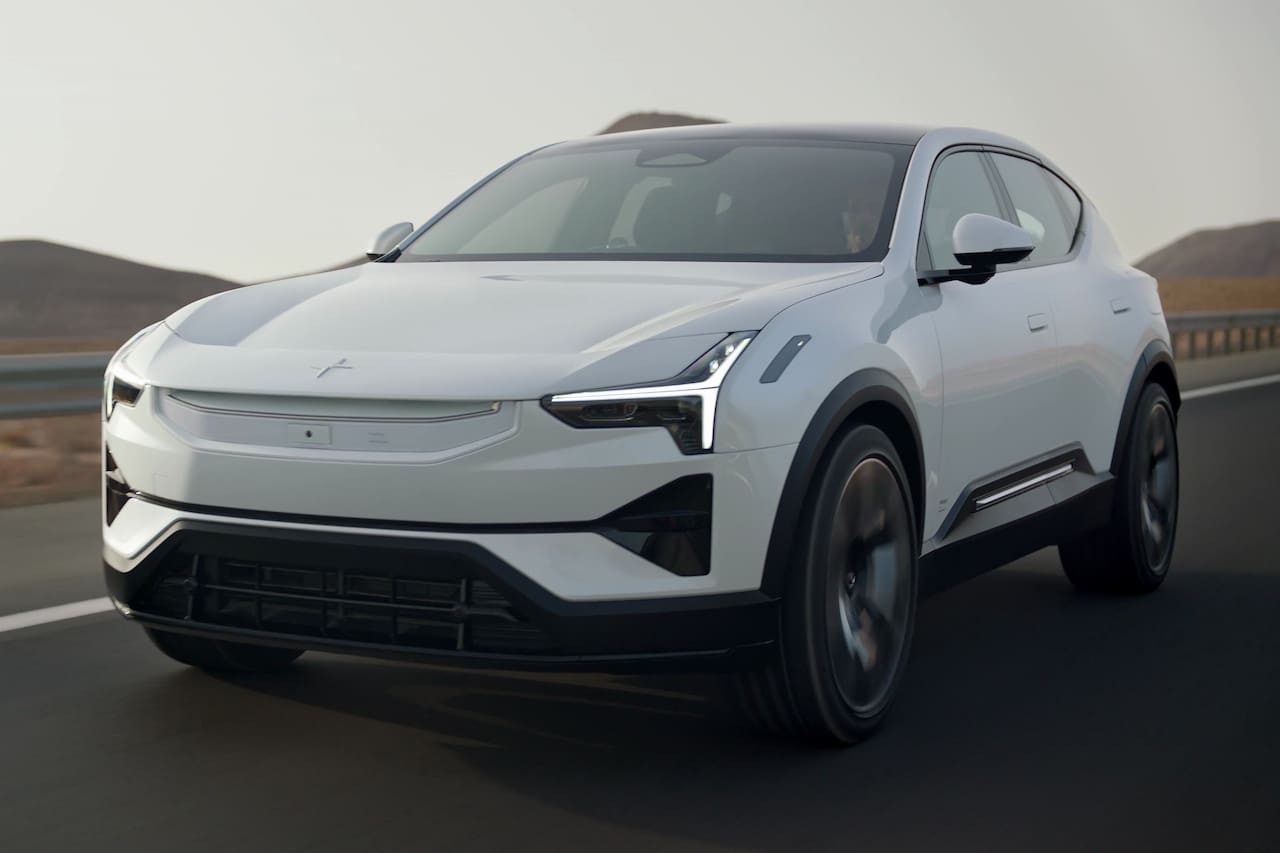
The Polestar 3 is a sporty SUV with a sleek silhouette. It features a hexagonal compact upper grille, horizontally flipped T-shaped headlamps with a ‘Dual-Blade’ DRL design, a trapezoidal lower grille, and triangular cut-outs in the outer sections of the bumper that could hide the vehicle’s LiDAR sensors. Another highlight is an aero wing integrated into the front of the hood that complements the rear aero wing and rear aero blades to lower the drag and improve travel range.
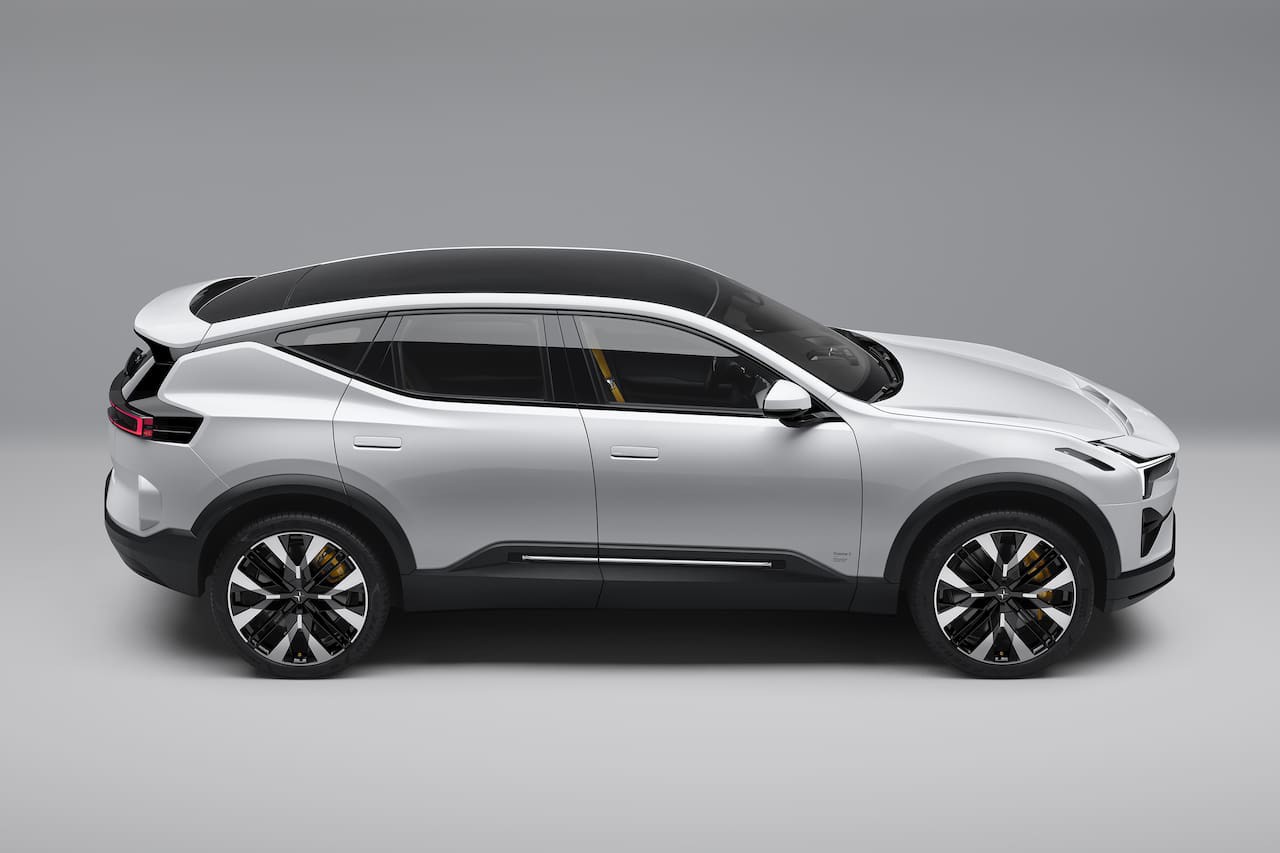
The car has a sharp kick in the beltline and a slim greenhouse, giving it a dynamic look. The roofline slopes slightly towards the rear, which should preserve the headroom. Flush door handles lend the SUV a touch of minimalism. A strong shoulder area, thick body cladding, two-tone finish wheels, and yellow brake calipers are also among the visual highlights.
The Polestar 3 has a wide and powerful stance at the rear. It doesn’t lean forward, which gives it a confident appearance from this angle. The continious tail light ends with wide C-shaped hooks, accentuating these attributes.
Interior:

Polestar wanted the 3 as an SUV for the electric age. It started with a large luxury SUV as the base. It put in a battery as a skateboard sandwich between the wheels and stretched the wheelbase to open up interior space.

A sportscar-inspired seating position and a lowered dashboard allowed Polestar to lower the roofline to achieve an aerodynamic, fast silhouette. The company excluded third-row seats and used the extra space to move the first and second rows wide apart. In the words of Ingenlath, “this is not a people-mover.” The 3 is a luxuriously-spaced five-seat model with generous legroom in the second row.
Polestar has used animal welfare-certified leather and fully traceable wool upholstery. The Polestar 3 is equipped with plenty of technology, comfort, and convenience features, many possibly shared with the Polestar 2. Polestar has given connected car solutions and on-board entertainment a lot of focus.
Features:
The Polestar 3 comes with 21-inch wheels, Brembo brakes, a panoramic glass roof, a 9-inch digital instrument cluster, a 14.5-inch touchscreen infotainment system, a three-zone automatic climate control system, and four USB-C ports as standard. Here’s a closer look at some of the top features.
(1)Digital Key
(2)Android-powered AVN
(3)Android-powered AVN & Google HD Map
(4)Bowers & Wilkins with 3D surround sound
(5)Advanced Air Cleaner
Specifications
Platform
The Polestar 3 sits on the SPA2 platform which will be shared with the EX90. The SPA2 is a skateboard chassis with a different floor assembly as compared to the SPA1 which underpins the XC90.
Dimensions & Cargo
The Polestar 3 measures 193 in. long, 83.5 in. wide (incl. mirrors), and 64 in. tall. It has a 117.5 in. wheelbase, and the curb weight ranges from 5,696 lbs. to 5,886 lbs.
The boot is 111 cm (43.7 in.)-wide — 126 cm (49.6 in.) if you calculate from one side pocket to the other — and 60 cm (23.6 in.) tall (from the tip of the rear seats).
Chassis
The 3 has a rear-biased dual-motor powertrain and a 50:50 weight distribution. Compared to a gas-powered SUV, the center of gravity is 100 mm lower, around the same as in the Polestar 1, a hybrid two-door, 2+2 seat GT coupe!
TDVC
The 3 has a Torque Vectoring Dual Clutch (TDVC) function that individually controls the torque distributed between the right and left rear wheels for improved agility at low speed and stability at high speed. The front motor can be decoupled to save energy when not needed.
daptive suspension
An adaptive, self-leveling dual-chamber air suspension with ZF active dampers is standard in the 3. With a high updating frequency of 500 Hz, the active dampers adjust as required by the road conditions once every two milliseconds. For example, if the driver is driving the 3 at 90 km/h (56 mph), it updates and adjusts the dampers every 5 cm (0.2 ft.) of the road.
Acceleration & Top speed
The Polestar 3’s two motors, one on each axle, produce 360 kW (483 hp) and 840 Nm (620 lb.-ft.) of torque. A 0-60 mph sprint takes 4.9 seconds (estimated), and the top speed is 130 mph.
Range & Charging
A CATL-made 107 kWh battery pack consisting of 204 lithium-ion NMC cells packed in 17 modules is standard in the Polestar 3. It operates at 400 volts and allows charging at up to 11 kW (AC)/250 kW (DC). There are also rumors that Polestar will double the maximum AC charging rate to 22 kW in 2025.

Manufacturing
Production of the Polestar 3 will take place in Chengdu, China, and Ridgeville, USA. Chinese production will commence in mid-2023, and American production will follow towards the middle of 2024. The Chengdu plant, operated by Volvo Cars, has an annual production capacity of 150,000 units. The Ridgeville plant, which Volvo Cars owns, currently makes the Volvo S60. Production of the U.S.-spec Polestar 3 will take place at the Chinese facility until the local factory is ready to produce.


